Build a career
in Spain’s restaurant industryA legal path to live and work
A profession, a diploma and a student visa D: legal grounds to live and work in Spain

From application to legal status in Spain
The course opens the route to a student visa and residence
Legalisation after the move is governed by Spanish law; the decision rests with the state authorities
After that it is Spanish law: you look for work yourself, in a different field if you wish
A profession Spain is hiring for
Small groups. Teachers from the restaurant industry
Practice on equipment, not on slides
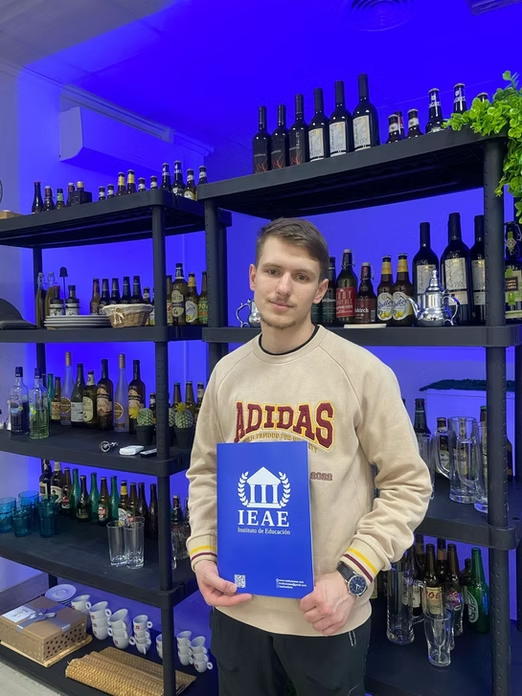
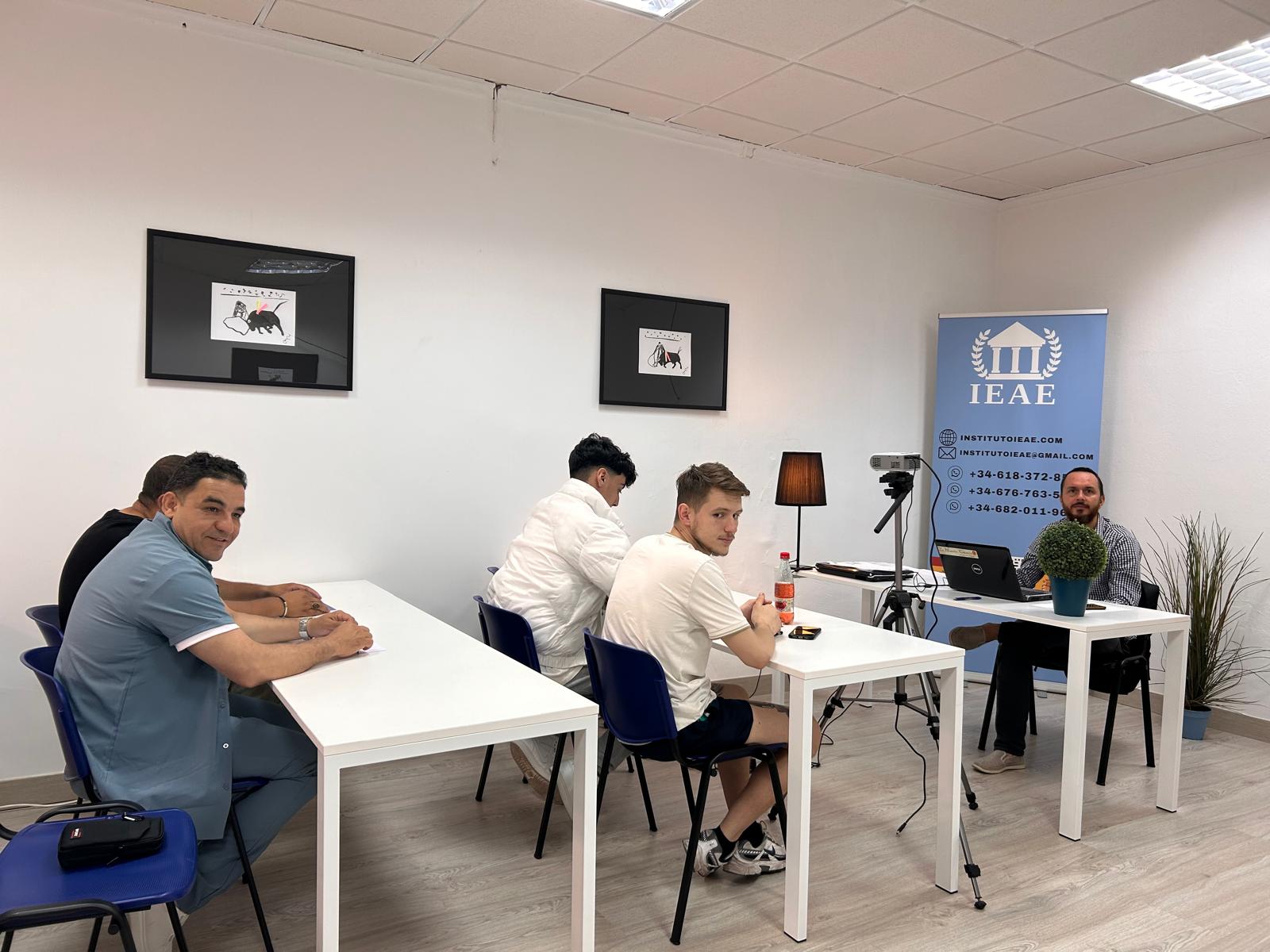
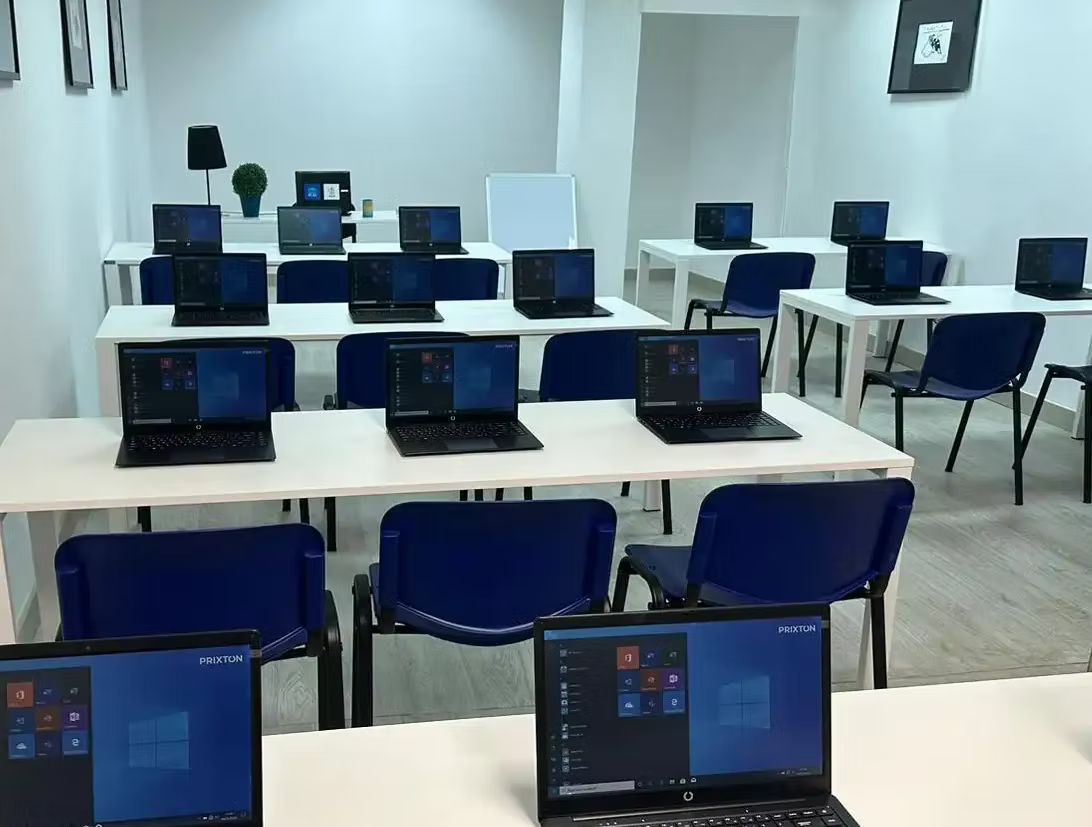
You practise service in the institute's hall, equipped for restaurant work
Small groups
Up to 14 people, so the teacher has time for everyone.
Teachers who practise
Working bartenders, sommeliers and chefs from Valencia restaurants.
Flexible schedule
Classes on weekdays, Mon–Fri, 4 hours a day — there is time left for work and errands.
Why a student visa rather than Digital Nomad
Two popular ways to move to Spain: Digital Nomad and studying.
- Income≈ €2,850/month (200% of minimum wage)You must prove income of ≈ €2,850/month (200% of the minimum wage, 2026).
- ContractA contract with a foreign companyYou need a contract with a foreign company or agreements with clients.
- TaxesIRPF 45–54%, Beckham regime 24%Tax resident: IRPF up to 45–54%; the Beckham regime at 24% is for employees.
- IncomeSavings, not incomeNo regular income to prove. The consulate looks at savings: enough funds in the account for the whole course — yours or a sponsor’s.
- ContractNot neededNo contract needed.
- TaxesNo income declaration requiredDeclaring substantial employment income is not a condition.
A student visa is not tied to income or contracts, and it does not pull you into a heavy tax regime. That makes it a simpler and more predictable way into Spain. The consulate decides on every application.
A language course or a profession
A language course gives no profession and no route to a work permit
If the goal is to stay and work in Spain rather than just spend a while here, a profession gives you grounds that language courses do not. Let's work out whether it suits you.
What the TIE card is
On a full-time course longer than 6 months you receive a physical foreigner ID card, the TIE
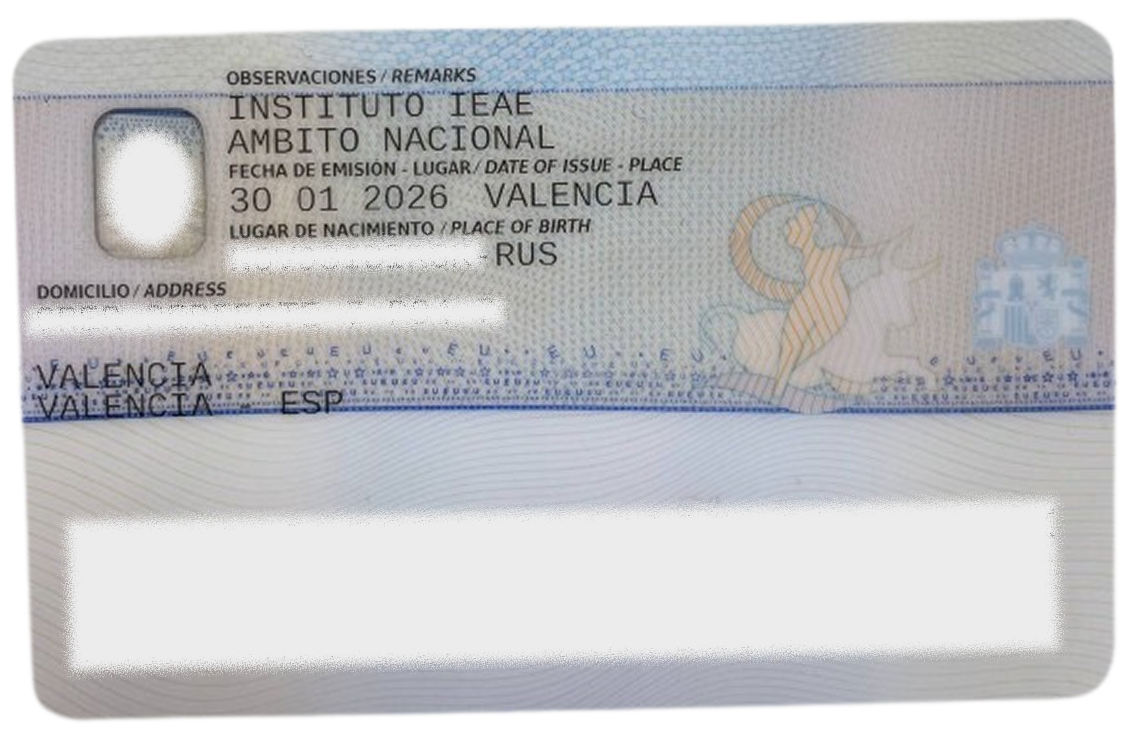
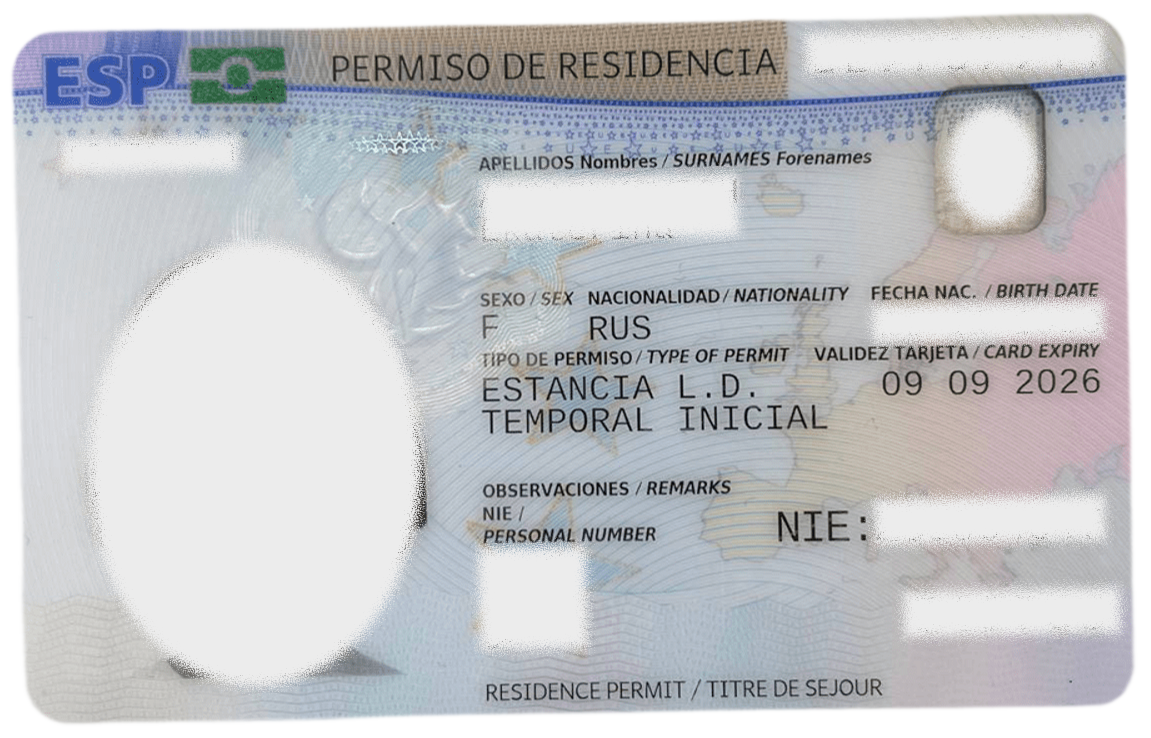
- A physical card, not a stamp
A plastic card confirming legal status in Spain
- Study is the legal basis
The «estancia por estudios» type, for the length of the course
- Tied to the institute
The basis is your course at IEAE, stated on the card
- Living in Spain and working while you study
Up to 30 hours a week, with a permit
- You can travel the world
Worldwide, not only Europe. Important: do not be away for more than half the period
How the card is issued
You get the D visa at the consulate in the country of your citizenship or legal residence and enter Spain on it. Within the first 30 days after arrival you give your fingerprints at the immigration office, and you are issued a physical TIE card for the length of your studies. The visa opens the door; the card confirms your status once you are in the country. We support you through this step. The visa decision rests with the consulate; the institute does not guarantee approval.
What you will master
From sommelier work and mixology to running a venue of your own.
Know Spanish wines and work with the guest the way a restaurant does.
- to taste and describe wine
- to find your way around Spanish D.O.s
- to pair wine with dishes and advise the guest
8 modules · 640 hours
From sommelier work to running a venue
4 more modulesCollapse
A specialist for every track
Every track is led by a working professional: a sommelier, a head bartender, a barista trainer
You are not taught by one generalist. Each track is led by a professional who does exactly this every day: a sommelier for wine, a head bartender for cocktails.
Tasting, Spanish appellations, pairing with dishes.
IBA classics, signature recipes, mixology.
Espresso, milk texture, the basics of latte art.
Bar gastronomy and the economics of a venue.
The jobs this opens up
The course prepares you for work in Spain's restaurant industry
High demand: hospitality accounts for around 1.8 million jobs in Spain, and in season 100,000–130,000 vacancies go unfilled.

Students who have already moved to Valencia
They came from China, Turkey, Armenia and Russia, and they are studying here

She spent about two months on the documents and is now on the barista module.

He got the visa first time and moved to Valencia for the autumn intake.

She put the package together with the institute and arrived right at the start of the intake.

He applied in spring and the visa came through in a month. He now studies and works part-time in a Valencia bar.
The institute has been running since 2002. Students from many countries come to Valencia and go on to work in bars, coffee shops and restaurants across Spain.
What you walk away with
A course that gives you a legal start to a life and a career in Europe.
Visas and residence permits are issued under Spanish immigration law; the outcome depends on the applicant.
A hybrid format that fits your rhythm
Some classes online, some on campus. Weekdays only
· weekends free
Classes on weekdays · weekends free
Theory online; practice and the training bar on campus.
Weekday classes, compatible with work and life.
We'll fit the timetable around your work or circumstances.
Course fees
On the call we'll arrange instalments and a start date
- 9 months of full-time study
- 80 hours of practice in the equipped hall
- An IEAE diploma
- Professional training for work in Spain
- Institute support until you have the diploma
Up to 30 h/week on a separate work permit
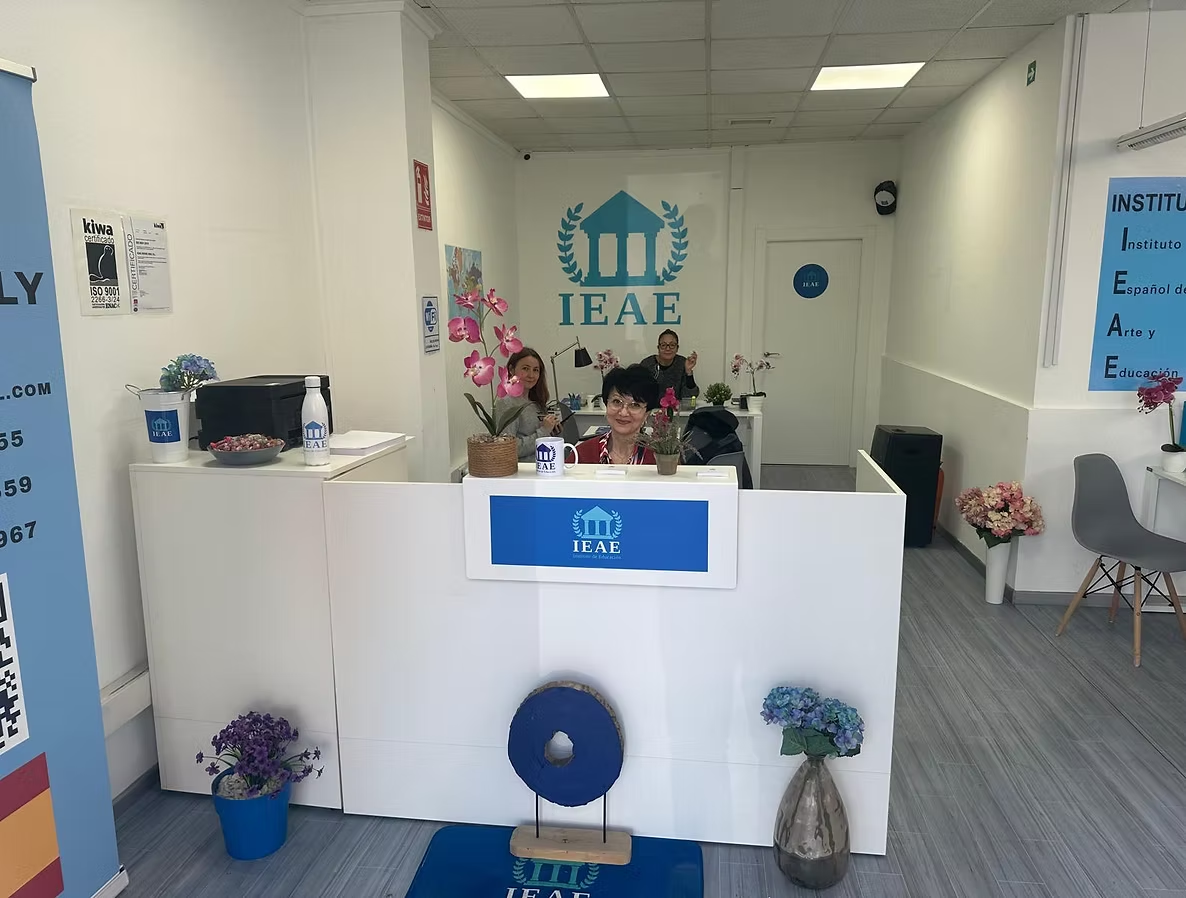
A campus in Benimaclet, Valencia's student quarter
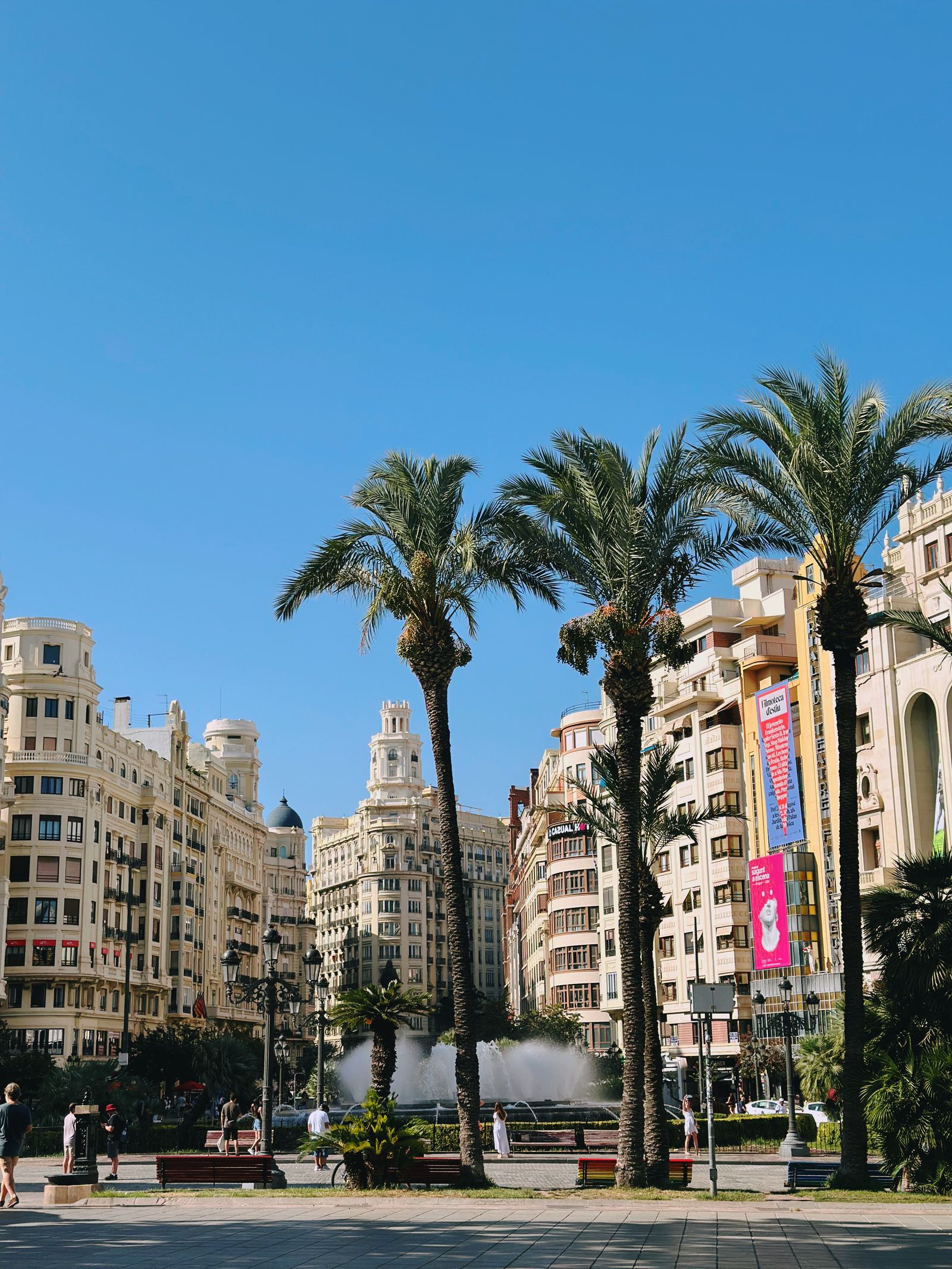
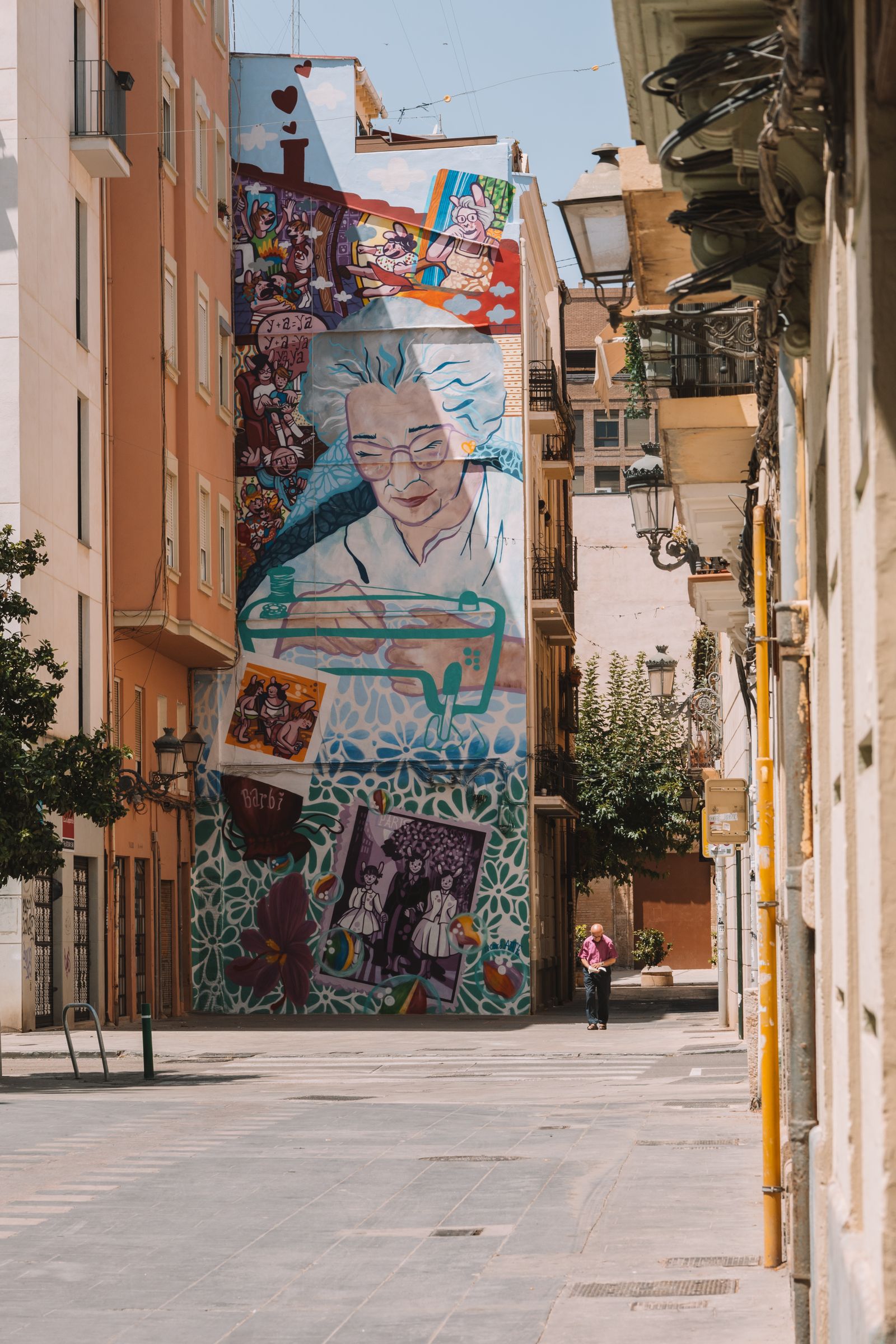
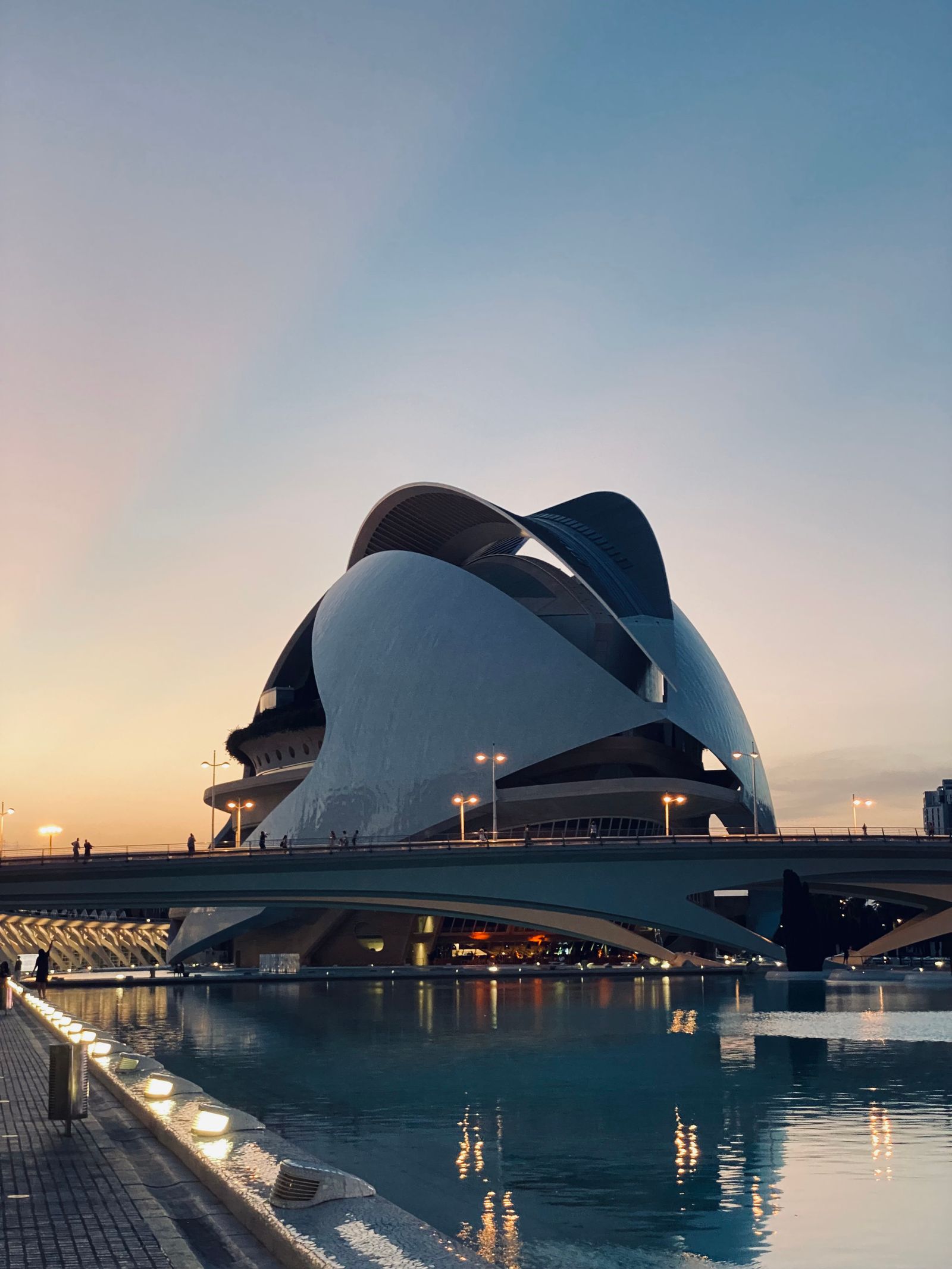
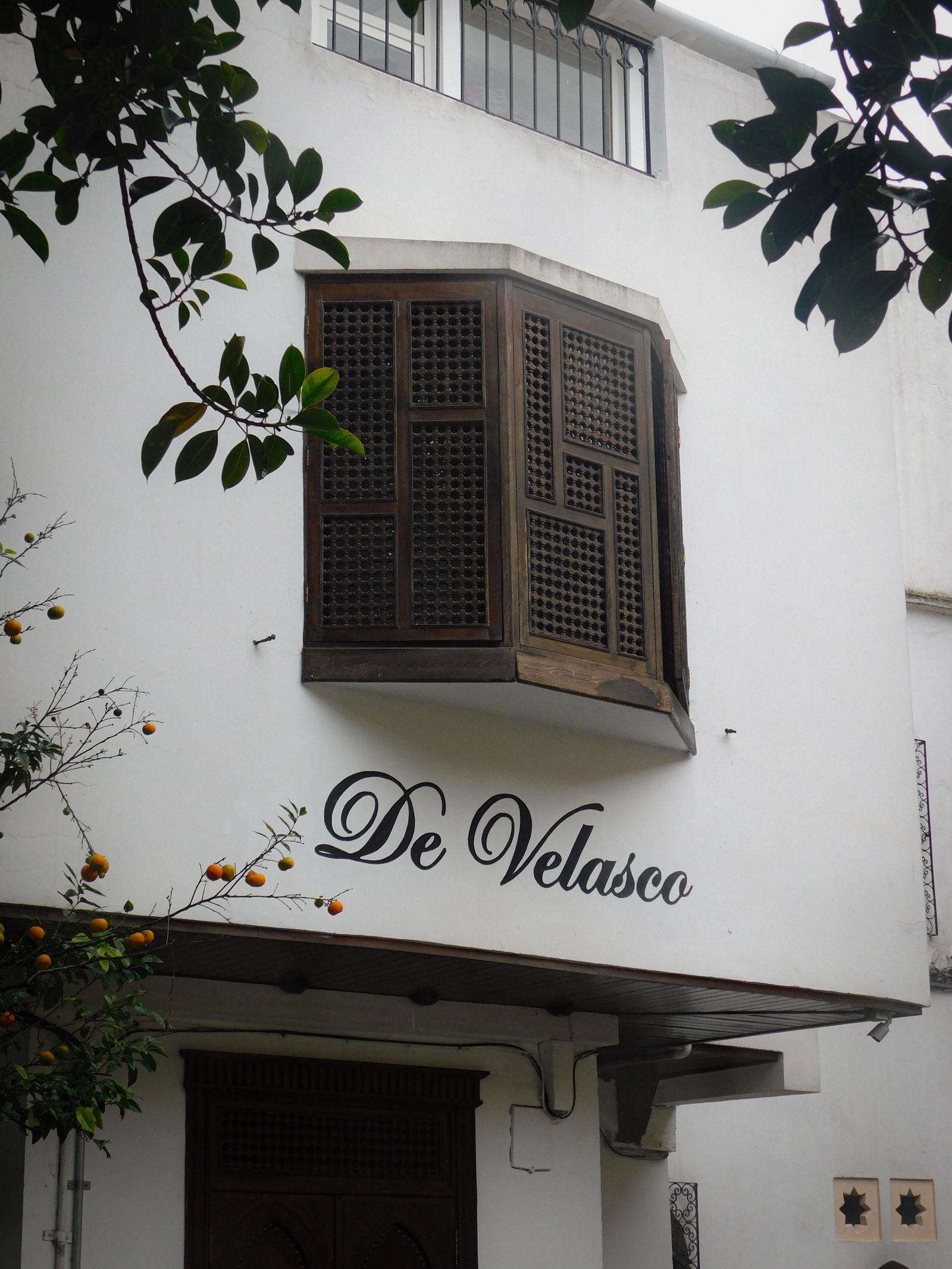
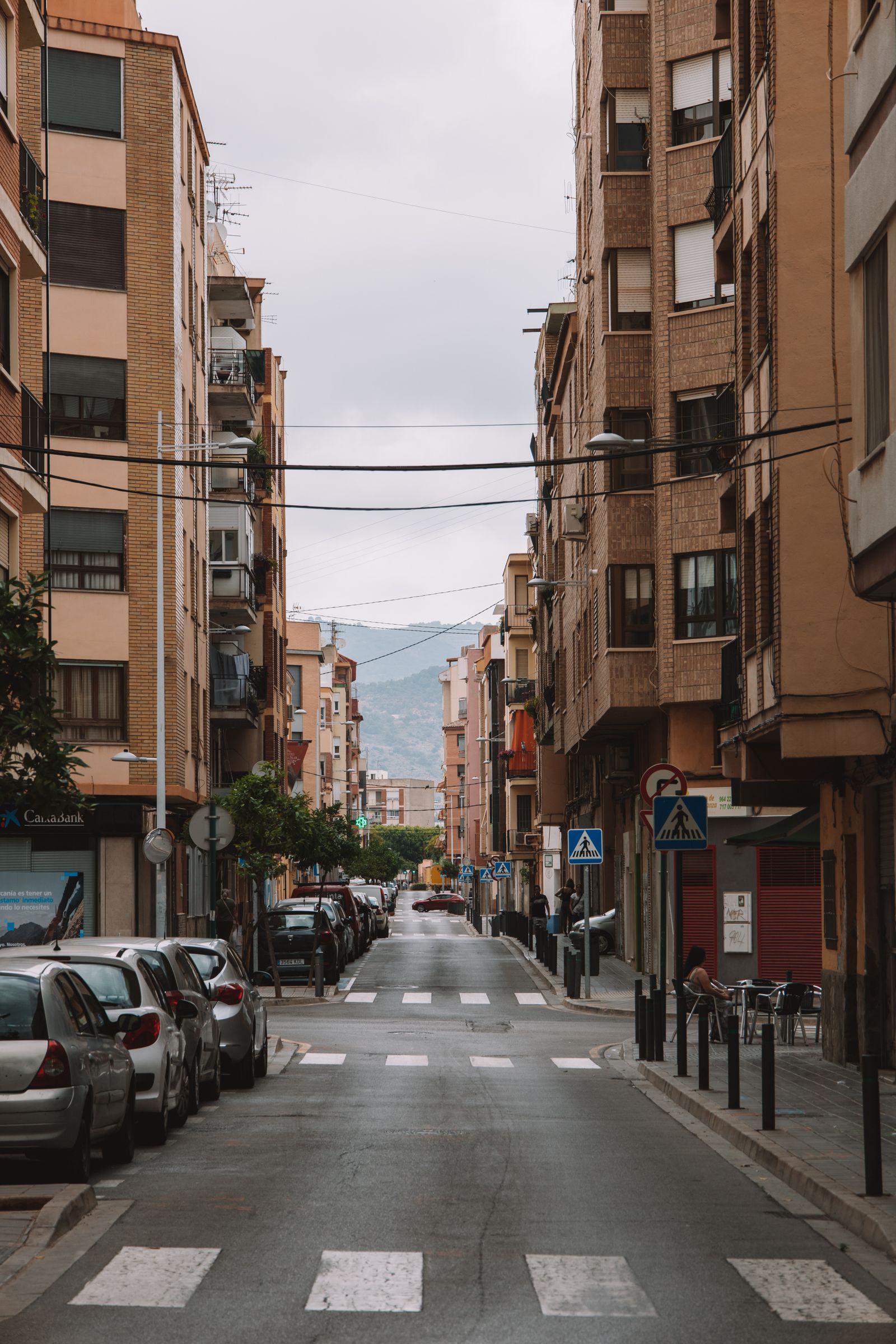
Benimaclet, Valencia's student quarter: its own square, its own market, 10 minutes to the sea
Benimaclet is a former village swallowed by the city, with its own square, its own market and winding streets instead of avenues. The university is next door; the beach and the centre are ten minutes away by tram and metro.
- Malvarrosa beach, 10 minutes by tram
- The historic centre, 8 minutes by metro
- Next door: the university, the market and the square



Come to an open day
See the campus, meet the teachers, ask your questions
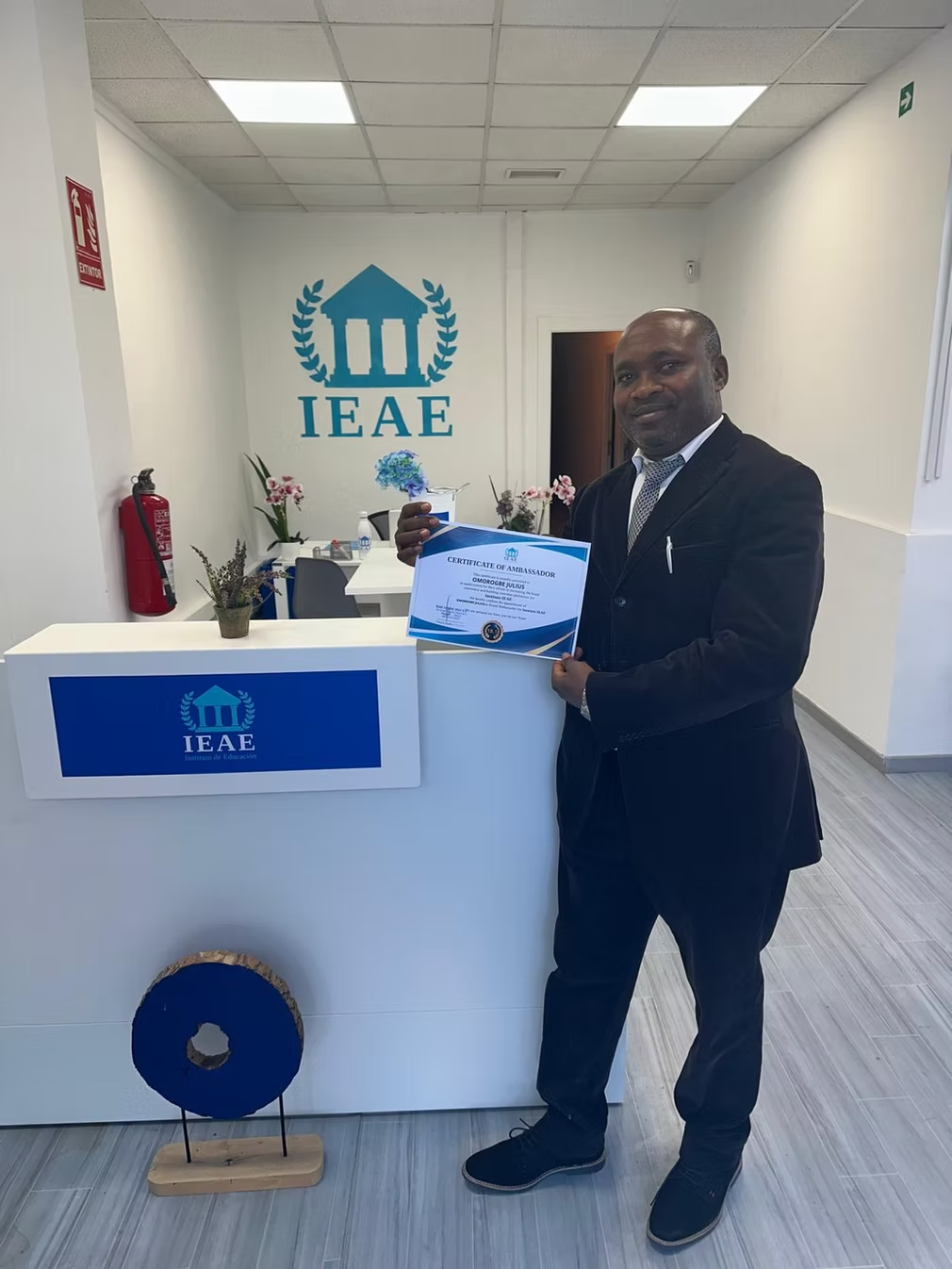
Come and see for yourself: look around the campus, meet the teachers and ask anything you like
Frequently asked questions
Answers on the visa, the diploma, work and payment
Answers on the visa, the diploma, working while studying and payment
On completion you receive the institute's diploma and a certificado de aprovechamiento. The diploma names the programme: Certificado Profesional Grado C Nivel 2, HOTR0508 — the one that under article 190 of the regulation opens the route to a work residence permit. The institute is accredited with SEPE/LABORA and the programme follows the official standard (640 h).
Yes, but not automatically. The law allows up to 30 hours a week, and a separate work permit is issued for it: your employer or you file the application. The permit is valid within the Valencian Community — but only while you study: once you move to a work permit the restriction is lifted and you can work anywhere in Spain. Practice that is part of the course needs no separate permit — the student status covers it (art. 57 RD 1155/2024).
Yes. While studying you may legally work up to 30 hours a week, and the job does not have to be related to the course. After you finish, when converting student status into a work permit, the contract may be in any profession, not only hospitality, up to IT and other fields (regulation RD 1155/2024).
Yes. The 640-hour full-time course lasts longer than 6 months and carries 20 teaching hours a week, exactly the load the law requires for a type D student visa. The consulate makes the decision.
The 80 hours of practice take place at the institute, in a hall equipped for restaurant service. That is where you practise and consolidate your skills under a teacher's guidance.
Classes run on weekdays, Mon–Fri, 4 hours a day. The programme runs for 9 months and a new intake opens every 3 months.
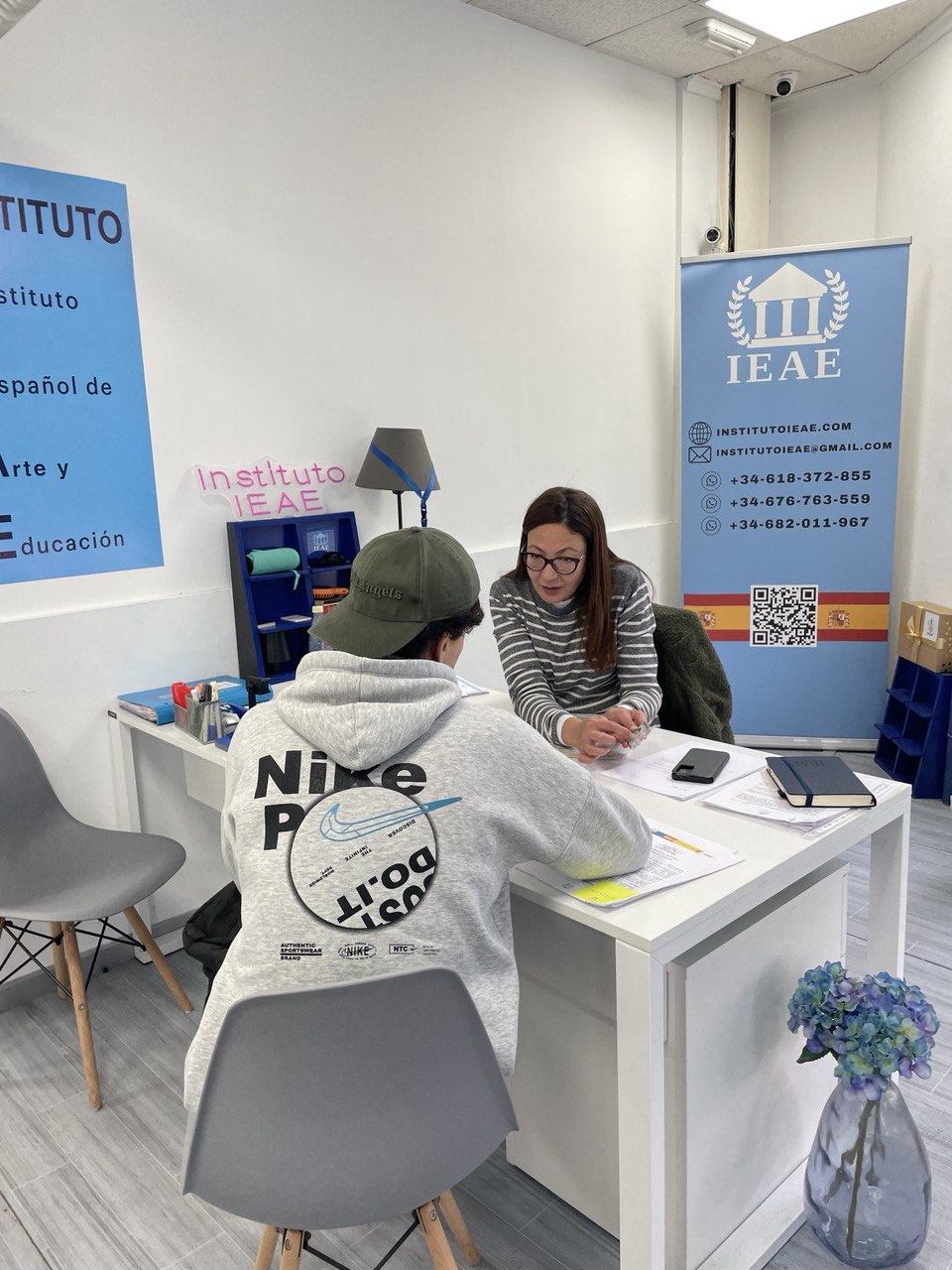
No work experience is required. Send an application and we'll call, work out whether the course suits you and help you gather the documents.
The course is designed for ages 18 to 35. This is the programme's own limit, not a visa requirement. If you are older, write to us and we'll look at your case separately.
Teaching is in English, with translation into five languages: Spanish, Arabic, French, Russian and Chinese.
We'll go through your situation on a free consultation
Let's look at your situation
6 questions, one minute, and we'll send an assessment for your country. Free
- Whether a visa D is realistic from your countryWhether a student visa D is realistic from your country specifically
- What it costs in full: course, visa, the moveWhat it costs in full: course, visa, the move, with no hidden extras
- Which documents you need and what follows the courseWhich documents you need, and what follows the course: work and life in Spain
- All above board: an accredited instituteAll above board: an accredited institute in Valencia and a legal D visa
Which country do you actually live in?
Start typing the name and search will help.